7 hr 30 min
Mauna Kea Summit Sunset & Stargazing Adventure
- Expert local guide
- Small group
- Skip-the-line access
- Free cancellation
Mauna Kea Stargazing Tour From Kona — Summit Sunset & Night Sky
Ascend 13,800 feet for celestial observation, guided telescope sessions after dark.
Compare fares, pick the fit — all bookings are mobile-voucher and eligible for free cancellation where shown.
7 hr 30 min
8 hr
8 hr
Selecting the right mauna kea stargazing tour from kona allows you to experience the summit sunset and dark-sky clarity safely. Travelers should weigh professional transportation against the flexibility of a self-guided journey to the Maunakea Visitor Information Station.
| Self-Guided Visit Visitor Station Access |
Top pick Guided Summit Tour Full Ascent & Stars |
|
|---|---|---|
| Entrance Fee | 0 USD | 0 USD (Tour cost separate) |
| Access Area | 9,200 ft Visitor Station | Summit & Mid-level areas |
| Transportation | Rental 4WD Required | Professional 4WD Van Provided |
| Acclimatization | Mandatory 30 min stop | Included in itinerary |
| Stargazing Method | Naked-eye/Staff laser | Telescope-assisted viewing |
| Best for | Budget travelers | First-time visitors |
| See tickets & prices |
Verdict: Choose a guided mauna kea stargazing tour from kona for a seamless experience with professional equipment, or visit the station independently if you have a 4WD and prefer flexible mauna kea stargazing tour from kona tickets.
Worth it for astronomers and sunset chasers
A mauna kea stargazing tour from kona delivers what few places on Earth can: access to the summit of a 13,796-foot dormant volcano with some of the planet's clearest night skies. Tours typically include sunset viewing from the summit, acclimatization stops, and guided stargazing with telescopes at lower elevations. The drive from Kona takes roughly two hours each way, and operators handle the challenging ascent and provide parkas for the cold. You're paying for expert-led astronomy education, safe high-altitude navigation, and zero light pollution—conditions that turn planets into visible disks and the Milky Way into a three-dimensional band. Best arrival window is 17:00–19:00 to acclimatize before dark. The summit hosts working observatories, and the cultural significance of Maunakea adds depth beyond the optics. Entry itself is free, but the guided experience justifies the tour cost for visitors without 4WD vehicles or altitude experience.
Bottom line: If you want to see the cosmos the way observatories do, Mauna Kea stargazing tours from Kona are among the few ways to reach that caliber of sky without professional credentials.
Guided tours offer a seamless, stress-free experience for reaching the summit, while a DIY trip provides greater flexibility for those comfortable navigating high-altitude road conditions.
|
Top pick Guided Tour |
Self-Drive | |
|---|---|---|
| Summit Access | Permitted, managed transport | Restricted to specialist 4WD rentals |
| Vehicle Requirement | None (bundled) | 4WD in low range required |
| Gear & Parkas | Included (arctic gear) | User provided |
| Altitude Safety | Managed acclimatization stops | Self-monitored stops required |
| Food & Drink | Meal/hot cocoa provided | None provided |
| Booking/Availability | Requires advance reservation | First-come, first-served (parking limited) |
| Intensity | Relaxed, fully supported | Physically demanding, high-stakes |
| See tickets & prices |
Verdict: For most travelers, a mauna kea stargazing tour from kona tour provides the safest and most reliable way to enjoy the summit sunset, whereas self-driving remains a viable choice only for experienced 4WD drivers who secure proper rental clearance and have their own mountain-ready equipment.
Hand-picked experiences loved by thousands of travelers
6 hours
Free Cancellation
Ascend Hawaii's tallest volcano for sunset views at 14,000 feet, then stargaze under some of Earth's clearest skies
6 hours
Free Cancellation
Journey between two massive volcanoes for solar viewing and nighttime astronomy under pristine Hawaiian skies
4 hours
Free Cancellation
Trek through volcanic forests to 9,394 feet, watch sunset above the clouds, then gaze at the Milky Way
2 hours
Free Cancellation
Observe celestial wonders from a private high-altitude location with telescope viewing and complimentary astro-portraits
7 hours
Free Cancellation
Journey between two massive volcanoes, explore lava caves, then stargaze through powerful telescopes under pristine Hawaiian skies.
10 hours
Free Cancellation
Full-day journey through volcanic landscapes, coffee country, and celestial wonders on the Big Island
9 hours
Free Cancellation
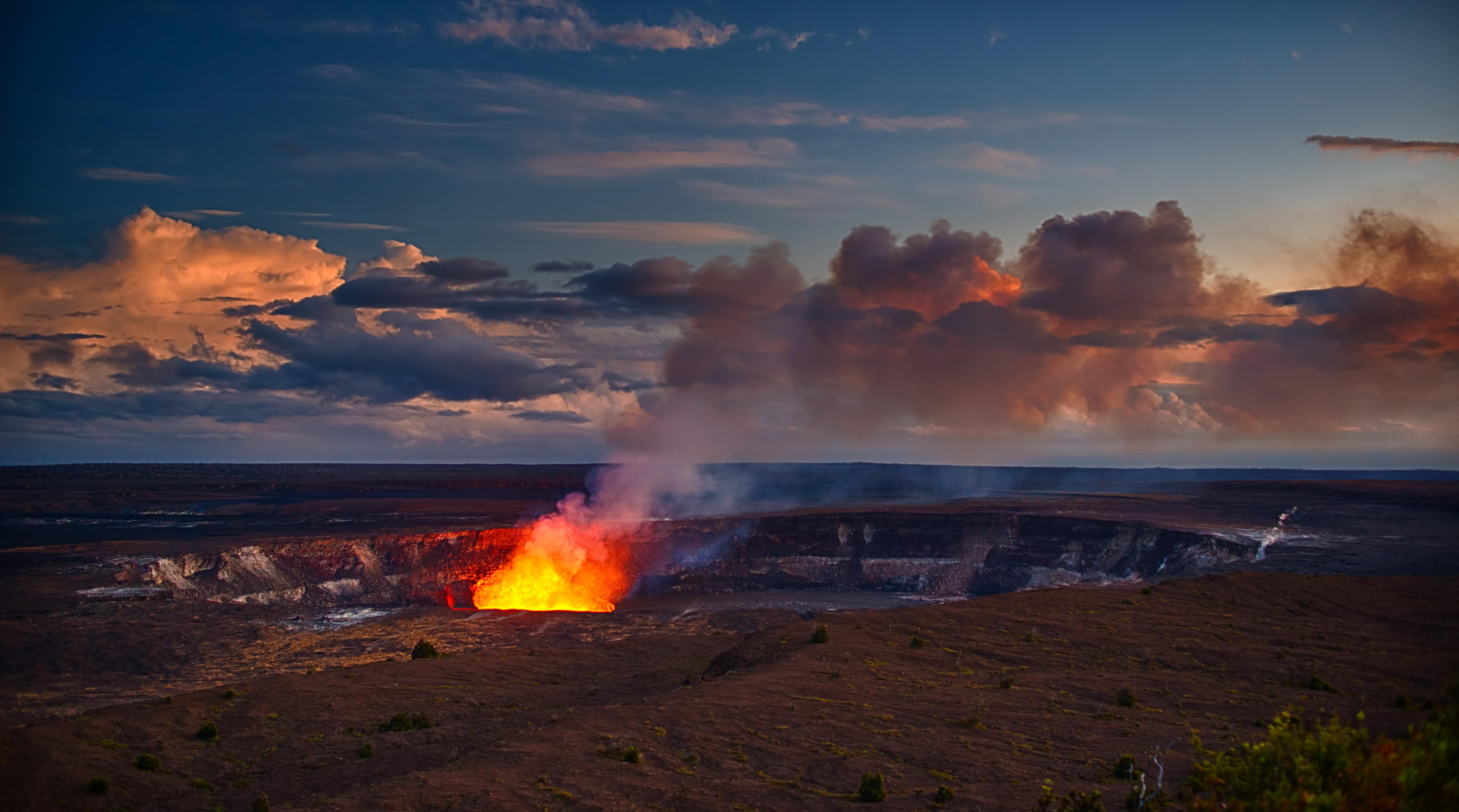
Full-day volcanic adventure from Kona through waterfalls, lava zones, and Hawaii's most active caldera
9 hours
Free Cancellation
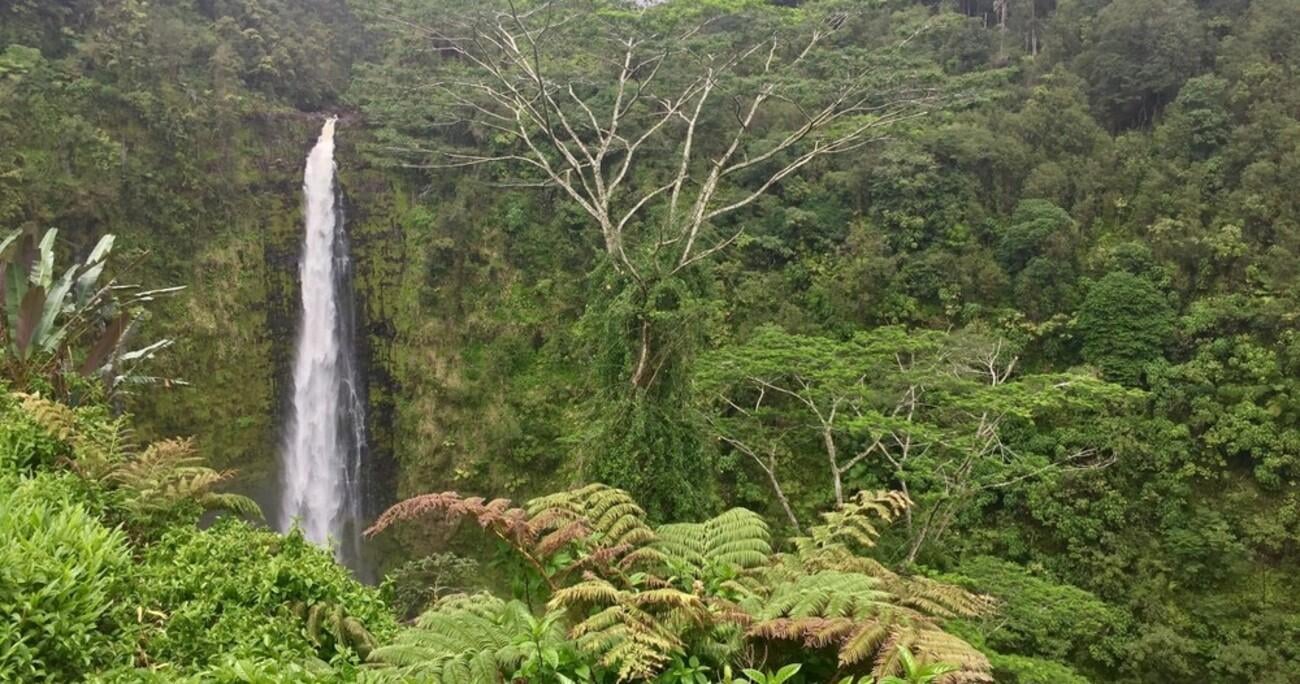
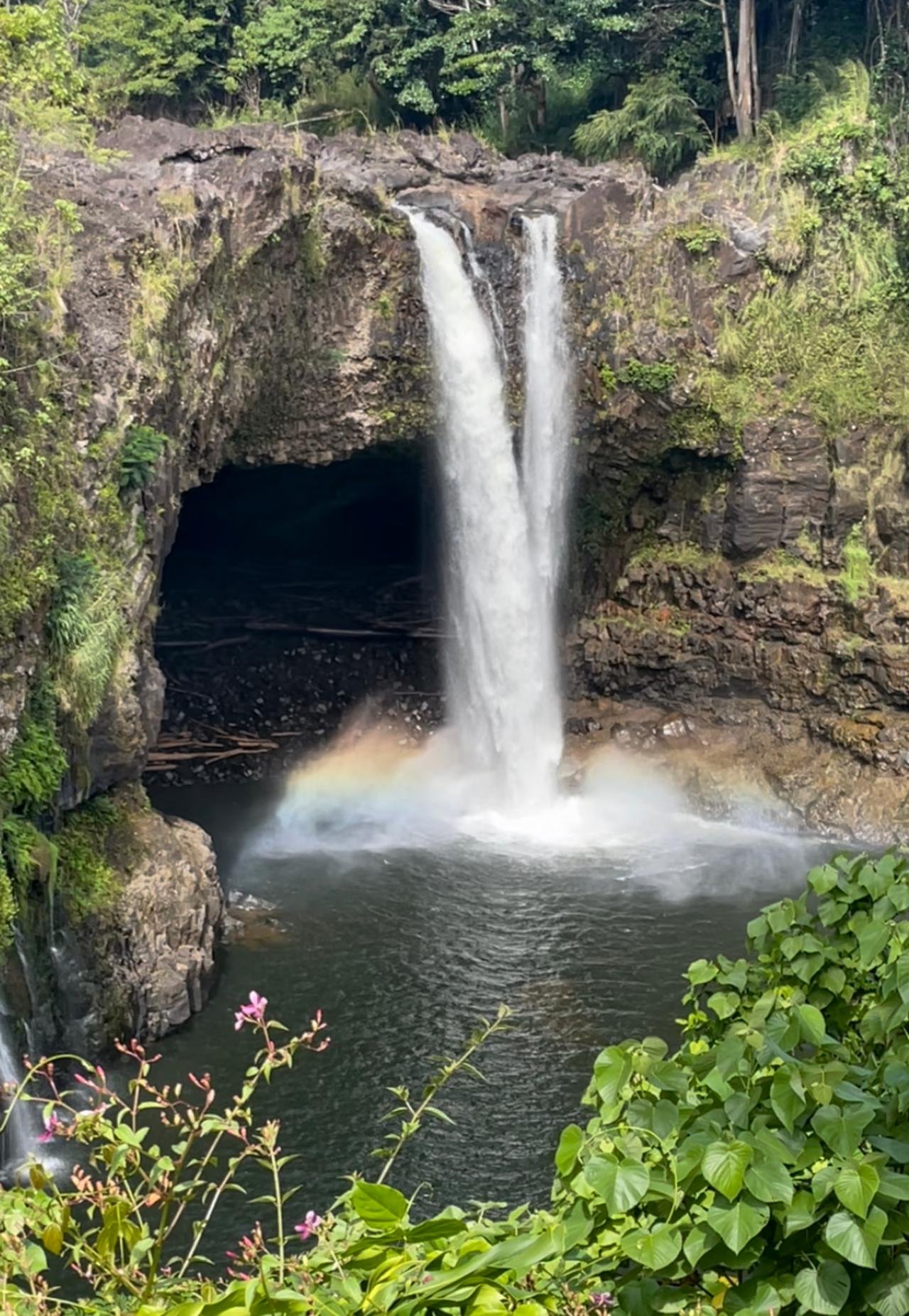
Journey from tropical cascades to volcanic heights on this full-day private tour of Hawaii's most dramatic landscapes
You board a 4WD van in Kona by mid-afternoon, the coast still bright with equatorial sun. The highway cuts inland through lava fields, then climbs into ranchland where the grade steepens and your ears pop.
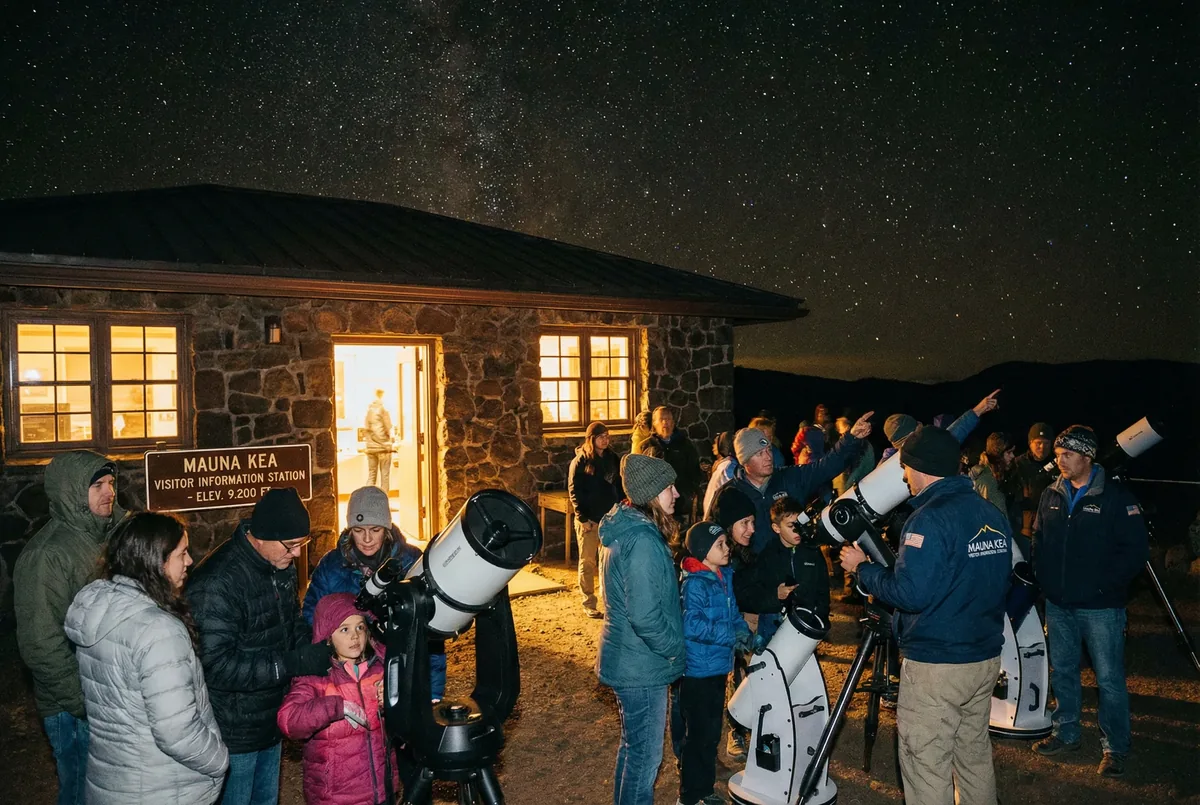
At 9,200 feet you step out at the Visitor Information Station, the air noticeably thinner, and accept a parka handed over by your guide. A brief pause here — soup, acclimatization talk, a glance at the summit far above — before the final push begins.
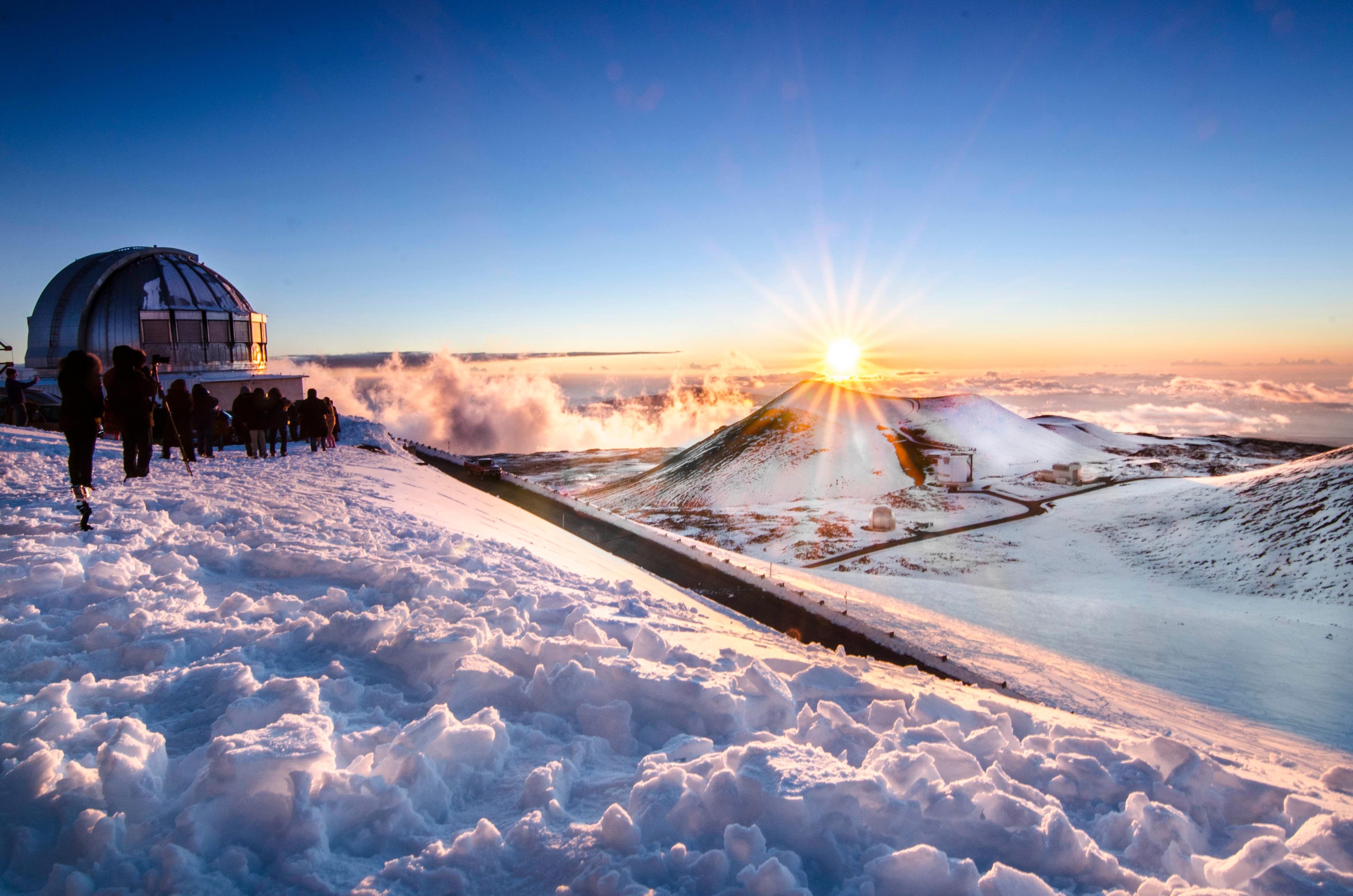
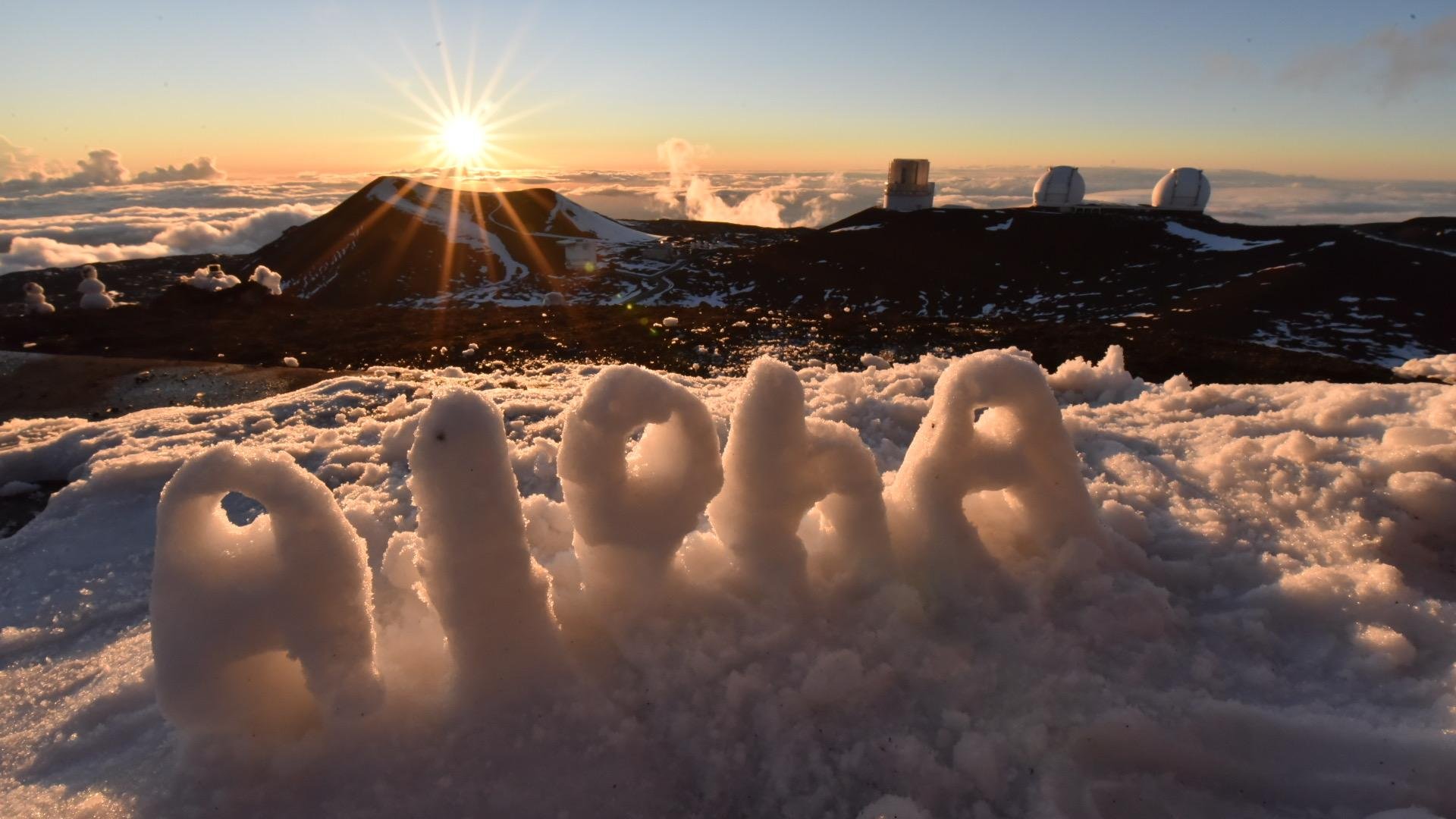
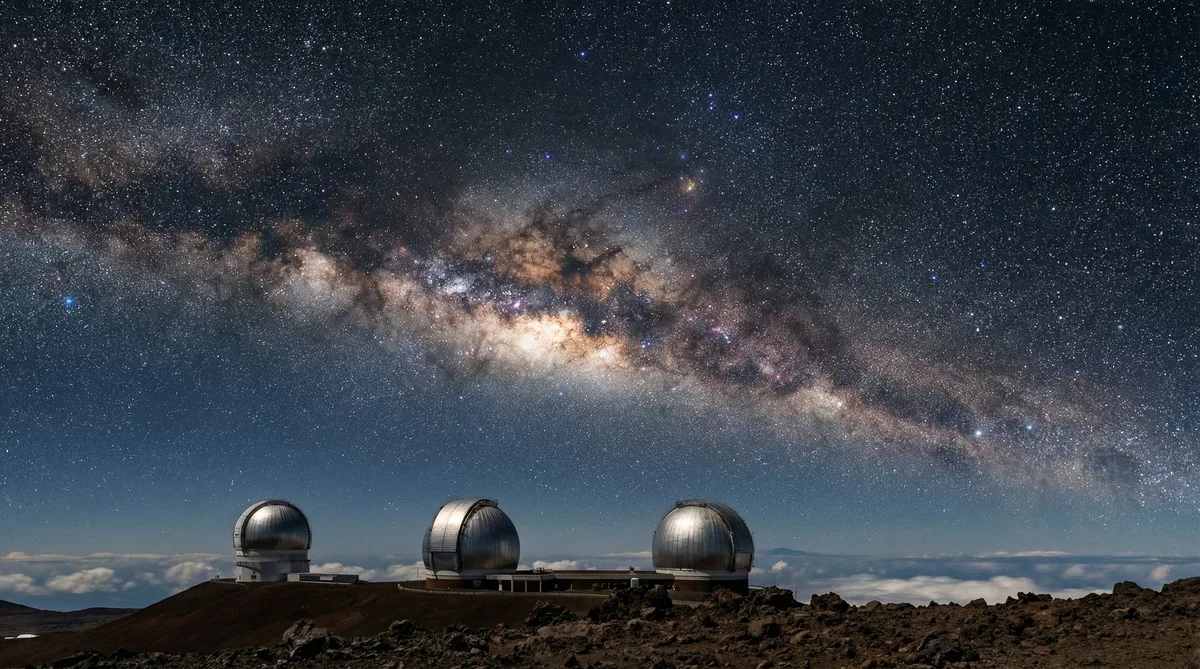
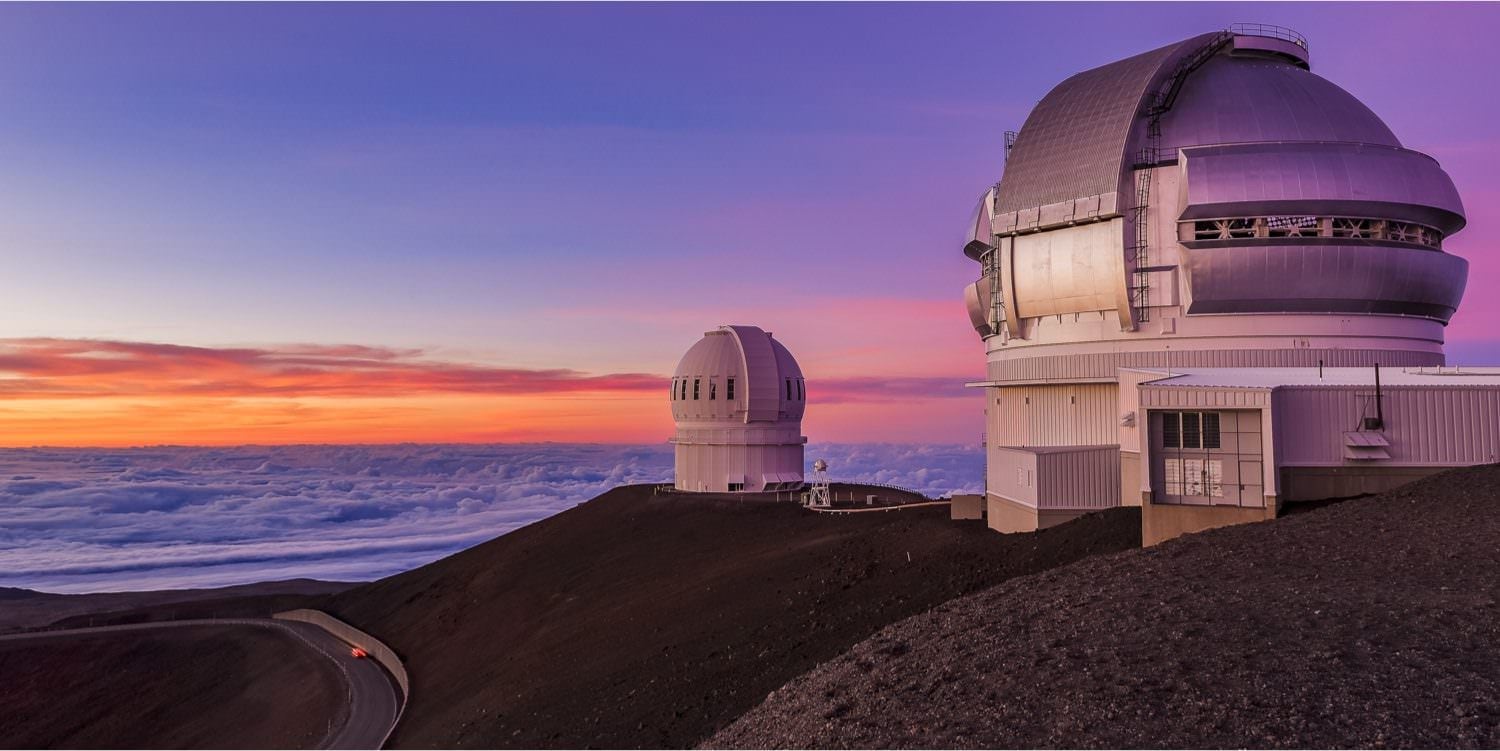
The road narrows and switchbacks through alpine desert, cinder cones darkening in the evening light. At the summit you walk carefully, breath short, and watch the sun drop toward a horizon that curves. The shadow of Mauna Kea stretches east across the cloudtops, a perfect triangular silhouette. Guides point out the observatory domes, white and motionless, then usher you back into the van as temperature plunges.
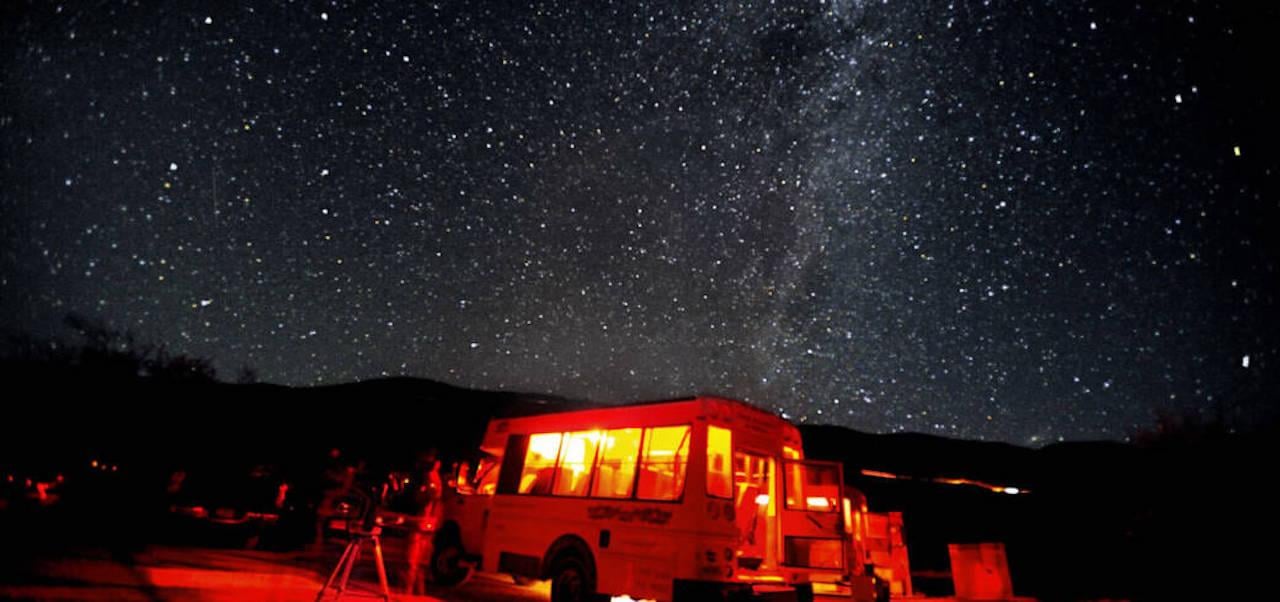
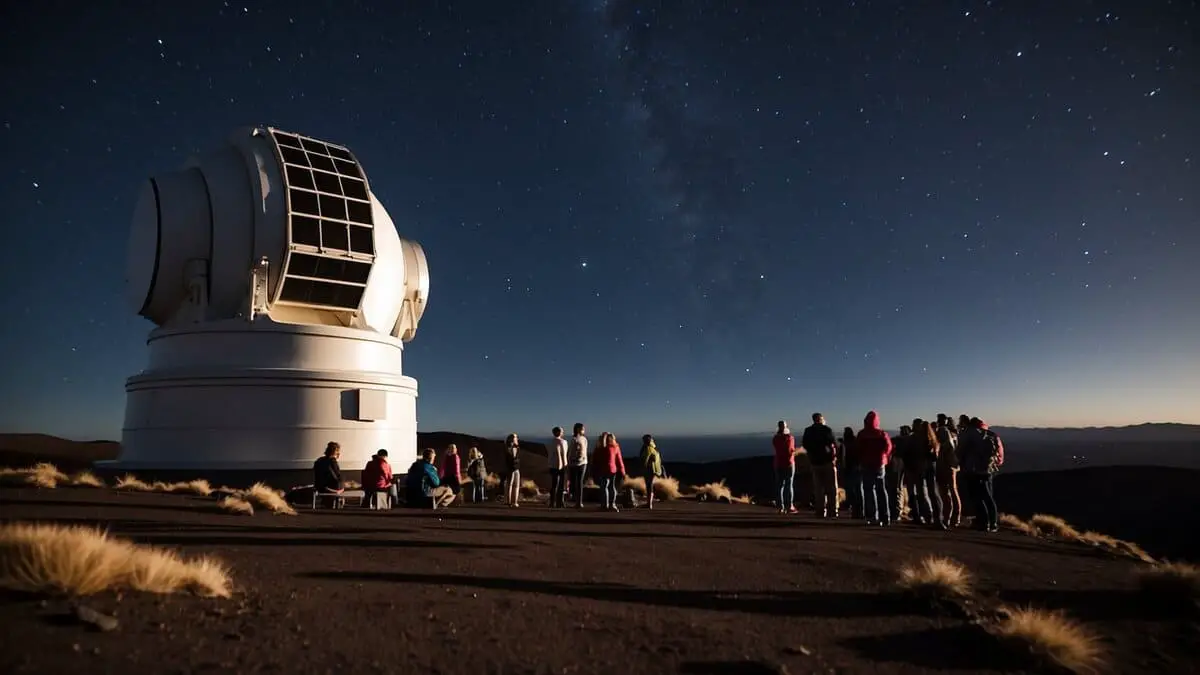
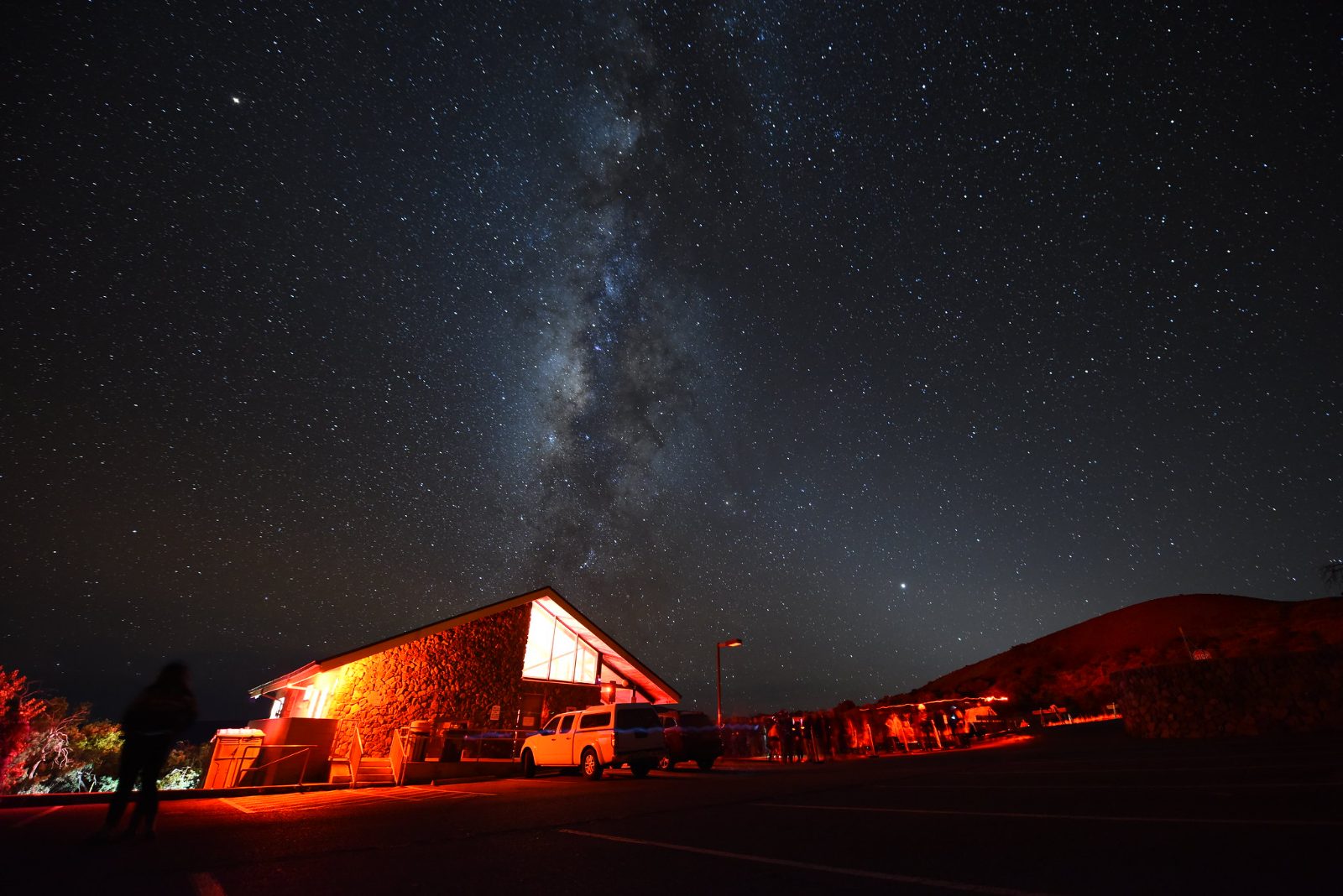
Descending to the Visitor Information Station, you find telescopes already aligned. You lean in, one eye to the eyepiece, and Saturn resolves — rings, shadow, moons. The guide repositions the scope and you see the Orion Nebula, a smudge of green and violet where stars ignite. Above, the Milky Way is no longer abstract: you trace its core, count meteors, and feel the cold creep through your boots. The tour ends near midnight, headlights carving a path back to sea level while you catalogue what you saw.
All the details about your upcoming adventure in one place
Mauna Kea rises 13,796 feet above sea level, making it the tallest point in the Pacific and one of the most isolated landmasses on Earth — a geographic fact that grants its summit skies a clarity found nowhere else in the Northern Hemisphere.
The mountain's volcanic peak pierces above 40 percent of the atmosphere, placing observers above much of the water vapor and light pollution that blur celestial detail at lower elevations. Since 1968, when the University of Hawaii established the first permanent observatory on the summit plateau, Mauna Kea has anchored the world's premier ground-based astronomy network. Thirteen observatories now occupy the summit ridge, operated by institutions from eleven nations, housing instruments that have mapped distant galaxies, detected exoplanets, and refined our understanding of cosmic expansion.
The mountain's cultural significance predates its scientific role by centuries. Native Hawaiians consider Mauna Kea the realm of the snow goddess Poliʻahu and a resting place for ancestors — a space where earth meets sky. The summit was kapu, or sacred, accessible only to aliʻi and kahuna for ceremony and burial. That reverence persists: the mountain remains a focal point in debates over development, sacred land protection, and the intersection of indigenous heritage with modern science. The tension is geographic as much as philosophical — the same atmospheric conditions that make Mauna Kea invaluable to astronomers also concentrate its spiritual weight for Native Hawaiian practitioners.
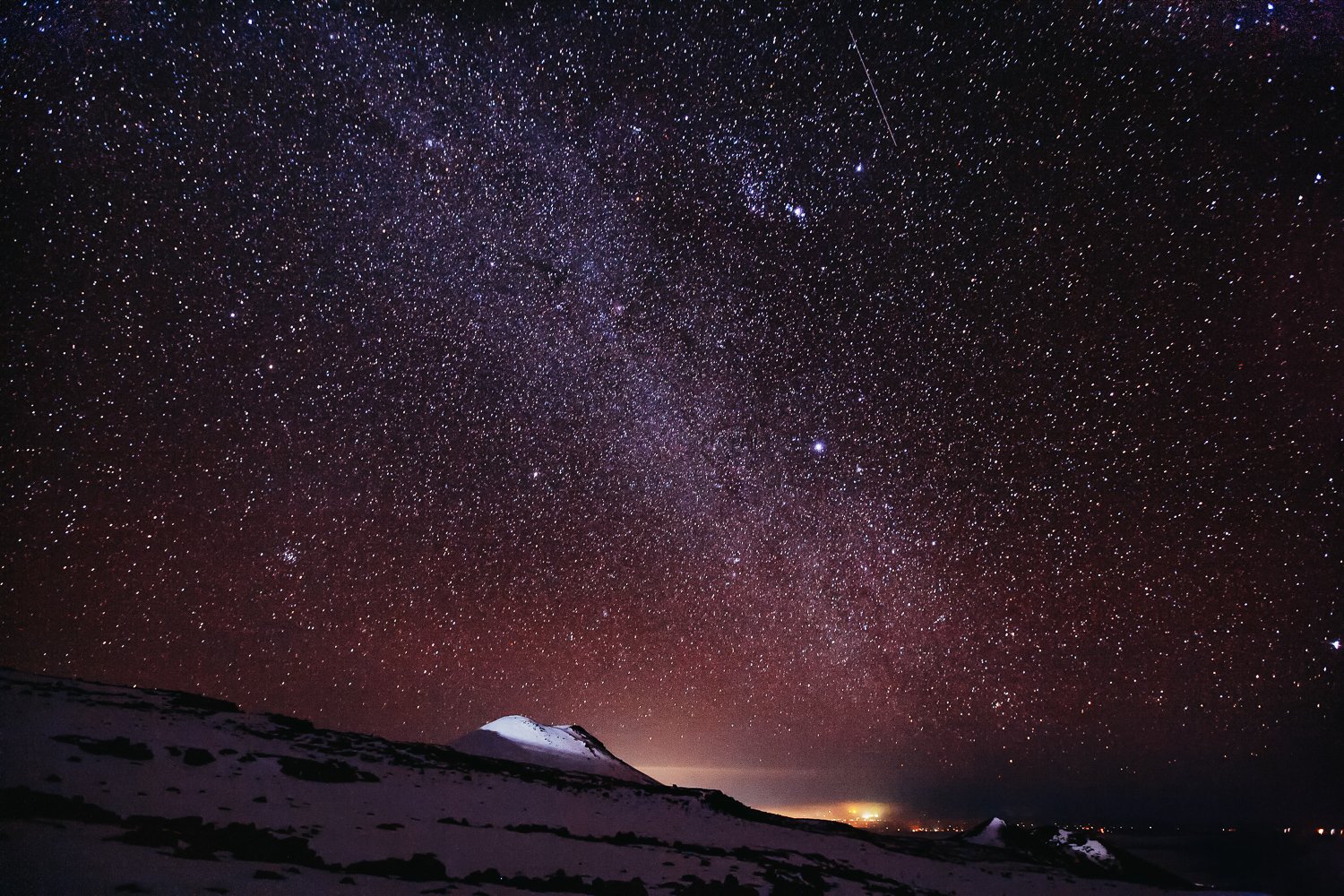
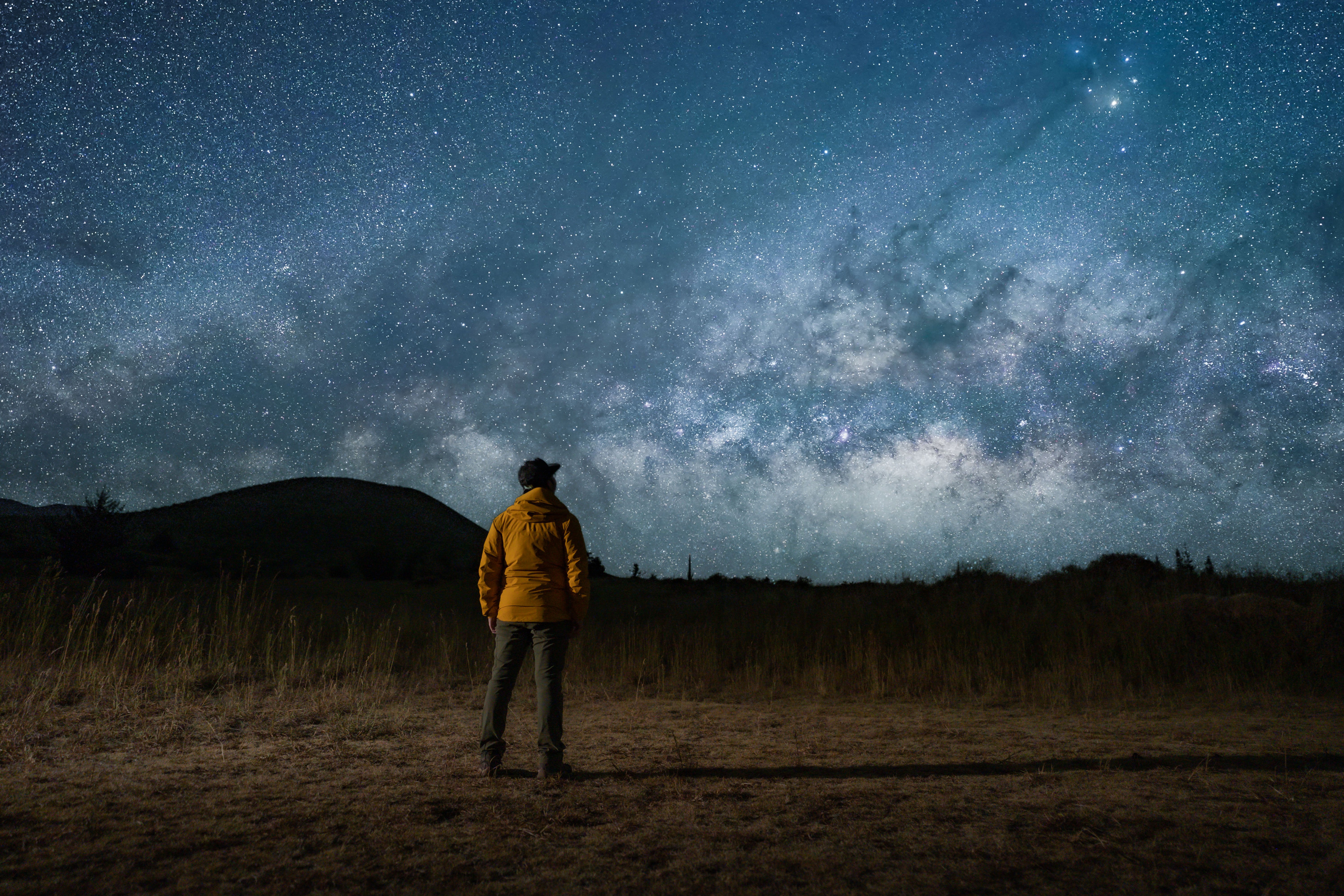
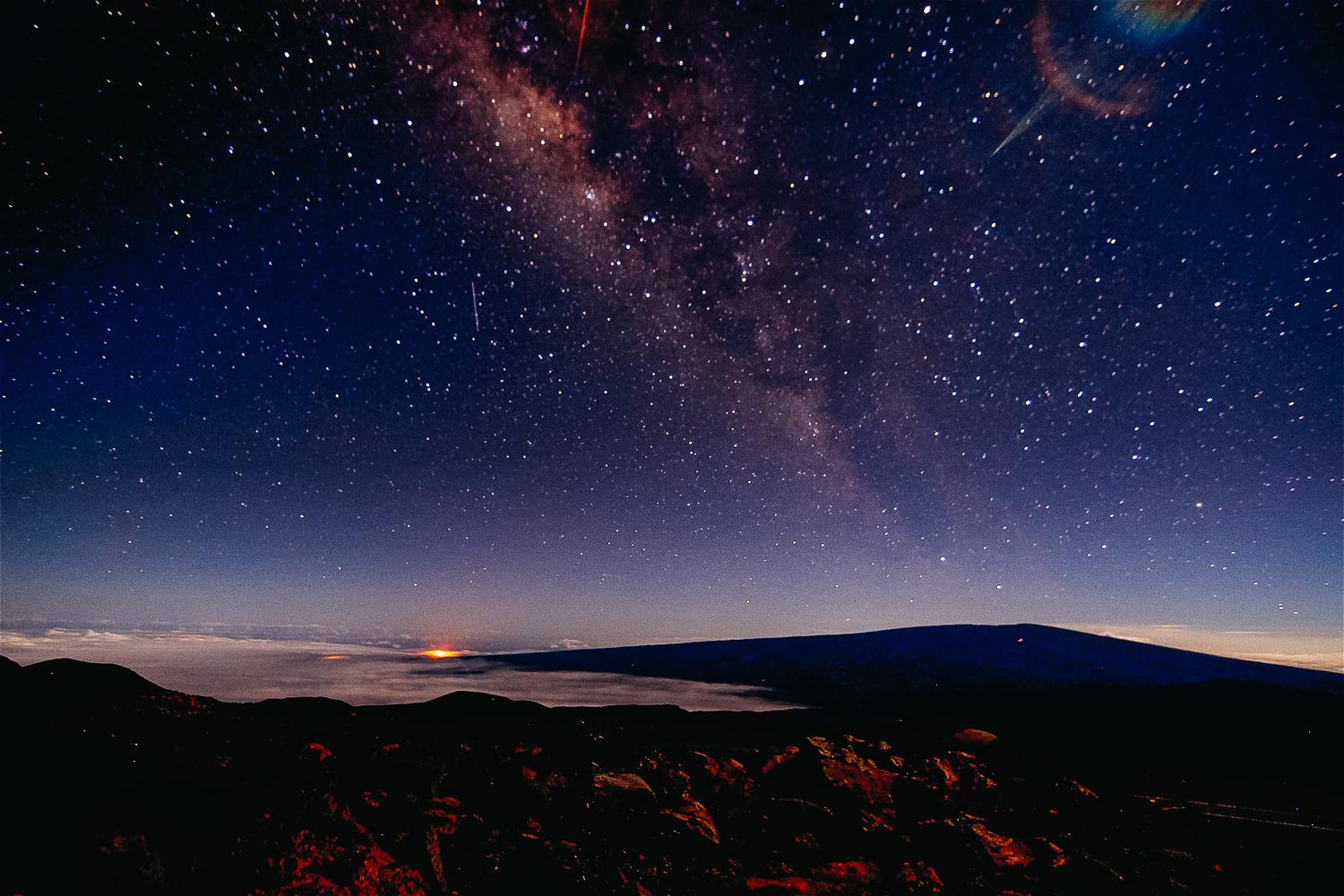
A Mauna Kea stargazing tour from Kona typically departs in late afternoon, allowing time for the two-hour drive up Saddle Road and the gradual ascent that helps visitors acclimatize to altitude. Most tours pause at the Visitor Information Station at 9,200 feet, where guides distribute parkas and serve a light meal before the final climb. Summit views at sunset reveal a horizon that bends visibly — the curvature of the Pacific rendered in gradient bands of orange and violet. After dark, guides set up telescopes for direct observation of planets, star clusters, and nebulae, offering naked-eye views that urban dwellers rarely encounter. The Milky Way arches overhead in three-dimensional relief, its structure legible without optical aid.
The summit's thin air and sub-freezing temperatures demand preparation. Guides monitor visitors for altitude sickness and limit time above 13,000 feet to reduce hypoxia risk. Tours descend to the Visitor Information Station for the main stargazing session, where oxygen density improves comfort without sacrificing sky quality. That mid-elevation compromise has become standard practice across Kona-based astronomy tours, balancing safety with the mountain's optical advantage. The result is an evening that compresses science, geography, and cultural history into a single vertical transect — sea level to summit in under three hours, then back down under stars that feel close enough to catalog by hand.

The mountain's volcanic peak pierces above 40 percent of the atmosphere, placing observers above much of the water vapor and light pollution that blur celestial detail at lower elevations.
Dress in multiple warm layers including a winter jacket, gloves, and a beanie, as temperatures at 9,200 feet frequently drop into the 40s Fahrenheit. Closed-toe shoes are mandatory for safety on uneven volcanic terrain.
Keep personal gear in a small daypack, as storage space in tour vehicles is highly limited. Note that the station is a mandatory security checkpoint for summit access.
Photography is permitted, though tripods are often restricted in crowded areas. Bring extra memory and batteries, as cold temperatures deplete power rapidly during your mauna kea stargazing tour from kona.
Children under 13 are discouraged from ascending beyond the 9,200-foot station due to altitude health risks. Families should supervise minors closely near cliff edges and telescopes.
The visitor center area is not fully ADA-compliant or stroller-friendly due to the natural, rugged landscape. High-altitude air quality may affect those with respiratory or cardiovascular sensitivities.
Carry sufficient water and light snacks, as there are no food services available on the mountain. Stay hydrated to assist with altitude acclimatization during your visit.
Opening hours
09:00–21:00
Address
Maunakea Access Road, Hilo, HI 96720
Entry fee
0 USD
Best arrival window
17:00–19:00
Storage
Not available at visitor station
Navigation
Follow Saddle Road to Maunakea Access Road
As a free public facility, the visitor station requires no booking or cancellation. For a private mauna kea stargazing tour from kona, confirm the operator's specific cancellation window in your booking confirmation.
Recommended time
4-6 hours
Planning your mauna kea stargazing tour from kona requires careful timing, as the high-altitude environment demands a structured approach to safety and logistics. You should follow the best arrival window of 17:00–19:00, which allows sufficient time for physical acclimatization to the thin air while securing a spot for evening astronomy observation. Because visitors are required to depart by the 21:00 closing time, efficiently managing your time at the Visitor Information Station ensures you gain the most value from these Kona landmarks without overstaying. Those looking for skip-the-line mauna kea stargazing tour from kona tickets should note that while entry is free, peak hours see heavy demand for parking.
Crowd levels through the day
Mauna Kea rises 13,803 feet above the Pacific, its summit crowned by snow for much of the year—a fact that gave the mountain its Hawaiian name, "white mountain." For Native Hawaiians, the peak has served as a sacred piko, a spiritual umbilical cord connecting earth to sky, since ancestral Polynesian voyagers first reached the archipelago around 400 CE. Only the highest-ranking ali'i were permitted to ascend, and burials of chiefs near the summit underscore the mountain's role as a bridge between the mortal and divine. Lake Waiau, a small alpine lake near the peak, remains a site of ceremonial offering and is considered the piko of the island itself. Modern astronomy arrived in 1964 when University of Hawaii researchers identified Mauna Kea's combination of high altitude, stable atmosphere, and minimal light pollution as ideal for observation. The first telescope, a 0.6-meter instrument operated by the University of Arizona, was installed in 1968. By 1970, NASA and the University of Hawaii had formalized an agreement to develop the summit, and construction accelerated. The W. M. Keck Observatory, with its twin 10-meter segmented mirrors, opened in 1993 and 1996, cementing Mauna Kea's status as the world's premier ground-based astronomical site. Thirteen facilities now operate on the summit, including instruments from Japan, Canada, and France. Tension between scientific access and cultural preservation erupted in 2015 when construction began on the Thirty Meter Telescope. Protectors of Mauna Kea blockaded the access road for months, arguing that further development desecrated the mountain. The standoff drew international attention and halted work indefinitely. Today, mauna kea stargazing tour from kona operators depart from the island's western coast, ascending the mountain to the Visitor Information Station at 9,200 feet, where guests acclimatize before continuing to the summit for sunset and telescopic observation. The tours navigate a landscape where astronomy and indigenous cosmology coexist uneasily, and where every visit to the summit carries the weight of both scientific ambition and cultural reverence.
Polynesian navigators settle Hawai'i and establish Mauna Kea as a sacred site reserved for ali'i burials and ceremony.
Protestant missionaries document Native Hawaiian pilgrimage to the summit and the spiritual significance of Lake Waiau.
University of Hawaii researchers identify Mauna Kea as an optimal location for astronomical observation due to altitude and atmospheric stability.
The first telescope, a 0.6-meter instrument operated by the University of Arizona, is installed on the summit.
The W. M. Keck Observatory twin 10-meter telescopes become operational, establishing Mauna Kea as the world's leading ground-based astronomy site.
Construction of the Thirty Meter Telescope is halted by protectors asserting the mountain's sacred status, sparking a months-long blockade and international debate.
Position your tripod on the northern edge of the lanai to capture the silhouette of the cinder cones against the twilight sky. This area provides a stable platform for long-exposure photography before the full darkness of the night settles over the landscape.
Planning a mauna kea stargazing tour from kona requires careful preparation due to the high-altitude environment and the physical demands of the summit area. Families should prioritize health and acclimatization over long-distance exploration to ensure a safe experience for all ages.
Due to thin air, children under 13 are often discouraged from reaching the highest elevations to prevent altitude sickness. Consult your pediatrician before booking mauna kea stargazing tour from kona tours, as rapid changes in air pressure can be difficult for young travelers.
The terrain surrounding the visitor center is uneven and rocky, making strollers impractical for navigating the grounds. Please rely on front-facing baby carriers if you are bringing infants to this Big Island landmark.
Restrooms are available near the visitor information station, though baby-change tables are not standard in these remote facilities. Plan to bring all necessary supplies with you, as there are no shops for last-minute needs when purchasing mauna kea stargazing tour from kona tickets.
Arrive between 17:00–19:00 to allow your group to adjust to the elevation before the sun sets. We recommend keeping your schedule flexible when planning a mauna kea stargazing tour from kona tour to ensure children have time to rest if they feel unwell.
There is no on-site food service, so pack plenty of water and easy-to-digest snacks for the drive up the Maunakea Access Road. Keeping kids hydrated is essential for managing the effects of high-altitude stargazing at this mountain observatory.
Dining options are extremely limited at the summit, so those joining a mauna kea stargazing tour from kona should plan to bring their own supplies. The high-altitude visitor center area lacks permanent commercial restaurants, making careful preparation essential for your Mauna Kea excursion.
Visitors often utilize the designated areas near the visitor center to consume packed meals before the mauna kea stargazing tour from kona tours depart for higher elevations.;Hoku Cafe
Everything you need to know for your journey
Entry to the Mauna Kea Visitor Information Station is 0 USD, but private tour operators charge for transportation and equipment.
The Mauna Kea Visitor Information Station is open daily from 09:00–21:00.
Most operators provide 4WD vehicles; standard rental cars are prohibited beyond the visitor station by state law.
Arriving between 17:00–19:00 allows time to acclimate and secure a spot for evening stargazing.
Most operators restrict children under 13 from summit access for safety, though they may participate in station-level stargazing.
Yes, the rapid elevation gain can cause headaches and fatigue; acclimatization at the 9,200-foot station is essential.
Bring warm, layered clothing, closed-toe shoes, and plenty of water for your mauna kea stargazing tour from kona.
Cellular service is restricted to emergency use only to avoid interfering with sensitive observatory radio equipment.
No, restrooms are only available at the visitor station, so use them before your final ascent.
Book your mauna kea stargazing tour from kona tickets directly through authorized tour providers listed on our inventory grid.
Join thousands of happy travelers who have discovered this incredible experience
Book Your Experience Now