

Quick answer
Mauna Kea observatory tours operate through the Visitor Information Station, open daily from 9am to 9pm, with free admission and no advance reservation required for the station itself. Summit access via the unpaved Maunakea Access Road is available to four-wheel-drive vehicles only; the observatories themselves are active research facilities and do not offer interior public tours, but visitors can view the telescope exteriors and attend free stargazing programs at the Visitor Information Station each evening, weather permitting.
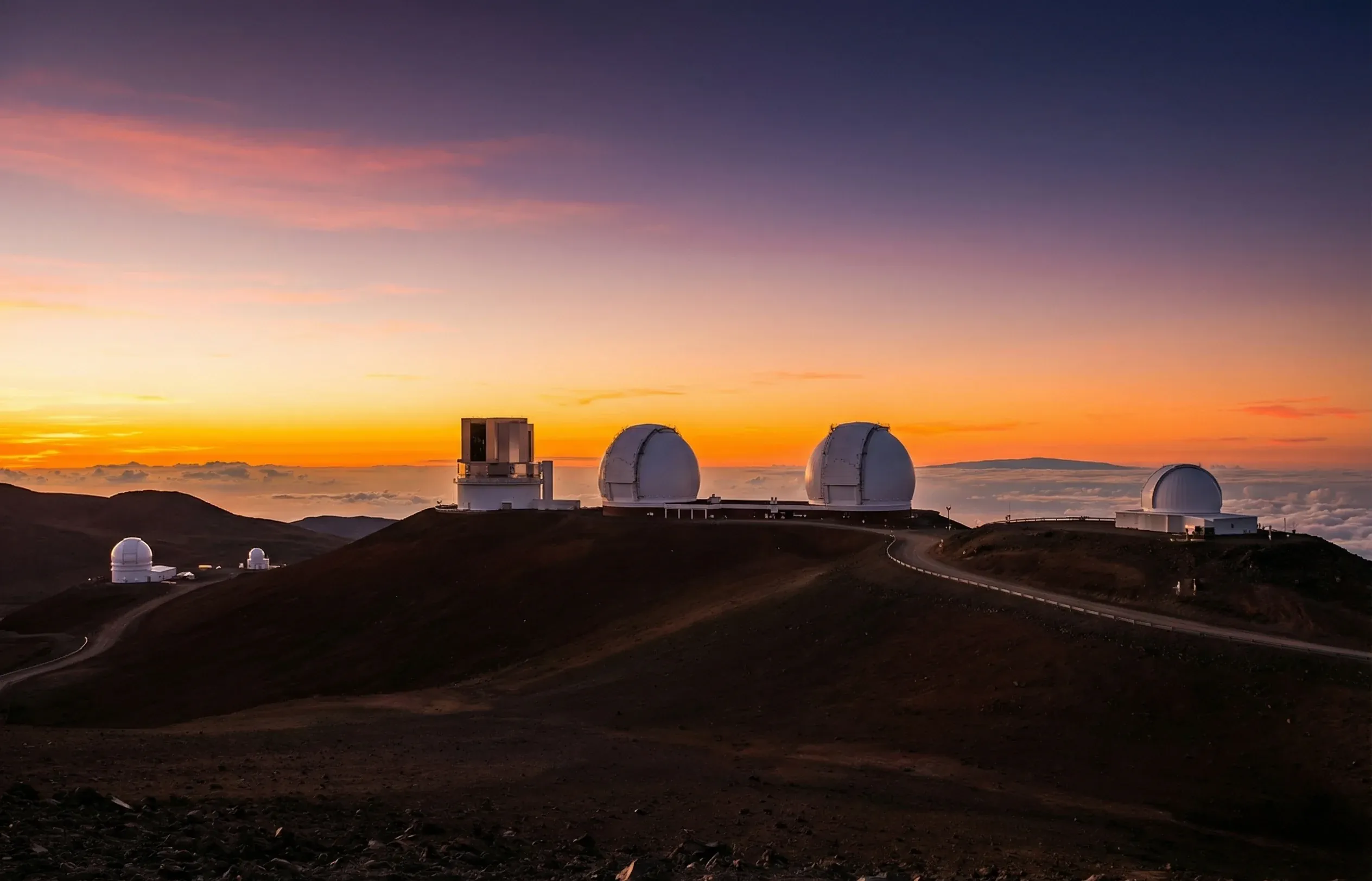
The observatories atop Mauna Kea represent the largest concentration of astronomical research infrastructure on Earth, operated by institutions from eleven countries. Unlike traditional attractions, these are working telescopes—Keck I and Keck II, Subaru, Gemini North, and nine others—engaged in active research every clear night. Public interaction happens not through facility tours but through education programs and summit access managed from the mid-elevation Visitor Information Station. Mauna kea observatory tours begin with acclimatization. The station at 9,200 feet provides the physiological buffer required before ascending another 4,600 vertical feet. Visitors are advised to spend at least thirty minutes at this elevation, though an hour is recommended for anyone planning to hike near the summit. The road beyond the station is unpaved, steep, and restricted to vehicles with four-wheel drive and low-range gearing. Rental sedans are prohibited by contract, and enforcement is consistent. Commercial tour operators handle logistics for those without appropriate vehicles, departing daily from Kailua-Kona and Hilo with sunset summit trips and guided stargazing. The summit plateau itself is a managed-access zone. Visitors may walk around the observatories and photograph their exteriors, but the telescope domes remain closed to casual entry. Research operations run on strict schedules, and even dignitaries rarely gain interior access outside formal arrangements. What draws visitors is not the buildings but the elevation, the clarity, and the sense of standing above forty percent of Earth's atmosphere. On nights with stable seeing conditions, the Milky Way casts shadows. Stargazing programs at the Visitor Information Station run nightly, weather permitting, beginning after sunset. Volunteers and staff set up telescopes for public use, targeting planets, star clusters, nebulae, and galaxies visible from the latitude of nineteen degrees north. These sessions require no reservation and are included in the free admission. Winter months bring the clearest skies, though summit winds intensify. Summer offers warmer conditions at the station but occasional afternoon cloud build-up. Altitude sickness affects roughly thirty percent of summit visitors; symptoms include headache, nausea, and disorientation. Descent is the only reliable remedy.
“The summit plateau holds the largest concentration of astronomical research infrastructure on Earth, with thirteen telescopes operated by institutions from eleven countries.”
Mauna Kea Observatory Tours and Visitor Center Operating Hours
The Visitor Information Station at Mauna Kea is open daily to assist visitors with information regarding the mountain and stargazing opportunities.
| Monday | 09:00–21:00 | |
|---|---|---|
| Tuesday | 09:00–21:00 | |
| Wednesday | 09:00–21:00 | |
| Thursday | 09:00–21:00 | |
| Friday | 09:00–21:00 | |
| Saturday | 09:00–21:00 | |
| Sunday | 09:00–21:00 |
Best Time of Day for Mauna Kea Observatory Tours
The best arrival window is 09:00–20:30, as arriving before sunset is essential for safe altitude acclimatization and proper preparation for evening stargazing. Planning your visit within this window allows for a gradual adjustment to the high-altitude environment before darkness falls.
Summer months
HighDry, 40°F to 60°F
Longer days provide consistent conditions for observing the night sky.
Winter months
ModerateOccasional snow, 30°F to 50°F
Lower temperatures require additional preparation for cold conditions at high elevation.
April and October
LowStable, 35°F to 55°F
These transition months often feature clear skies and fewer visitors than peak travel seasons.
Weekday afternoons
Low—
Arriving mid-day assists with acclimatization and reduces congestion at the visitor station.
Verdict: The most effective time to visit is during the shoulder months of April or October, arriving in the afternoon to allow for gradual altitude adjustment.
Mauna Kea Observatory Tours Entrance Fee Information
The Maunakea Visitor Information Station does not charge an official public admission fee. Access to the visitor area remains free of charge for all guests.
Public visitors pay 0 USD for entrance, though expenses may arise if booking private transportation or third-party guided tour services.
Getting to Mauna Kea Observatory Tours and the Visitor Station
The Maunakea Visitor Information Station is located off the Maunakea Access Road on the Big Island of Hawaii. Access is primarily achieved by private vehicle, as public transportation does not service the mountain.
Saddle Road (Daniel K. Inouye Hwy) to Maunakea Access Road
Saddle Road (Daniel K. Inouye Hwy) to Maunakea Access Road
Mauna Kea Observatory Tours Preparation Checklist
High-altitude conditions at 9,200 feet demand specific preparation for safety and comfort.
-
Wear insulated layers and windproof jacket — Temperature drops significantly after sunset, often below freezing.
-
Bring water and avoid alcohol beforehand — Altitude increases dehydration risk and impairs acclimatization.
-
Pack sunscreen and UV-protective sunglasses — Thin atmosphere at elevation intensifies solar radiation exposure.
-
Allow acclimatization time at the Visitor Station — Spending 30–60 minutes at mid-elevation reduces altitude sickness risk.
-
Avoid if pregnant or with heart conditions — High altitude poses serious health risks for certain medical conditions.
-
Bring a flashlight or headlamp — Limited lighting on the access road requires personal illumination after dark.
Check availability
Frequently Asked Questions About Mauna Kea Observatory Visits
Everything you need to know about mauna kea observatory tours